
Being a Star Trek fan is frustrating these days. For every good Trek episode, we get at least one (or more) questionable creative choices among the Trek leadership. We need go no further than the current season of Star Trek: Strange New Worlds (SNW) for a lesson in creativity run amok. This is not the fun, Vulcan’s-humping kind of Amok Time; it is the “what the hell are you thinking” kind of amok-ness.
With this month being the 60th anniversary of the first broadcast of Star Trek, it seemes the right moment to reflect on where Star Trek is and how it is trying to remain relevant in our dystopian 2026.
In all fairness, the first two seasons SNW are some of the best Trek ever made. Strong characters, engaging stories, great effects… What was not to love? The final episode of Season 1, a reimagining of Star Trek: The Original Series episode Balance of Terror, was intense. The Lower Decks cross-over episode (Those Old Scientists) from S2 was a blast.
Then we got S3, with one gimmicky episode after another. It was easy to wave off some of the questionable episodes, as they were still funny and we got a few gems in the season, such as episode 3, The Sehlat Who Ate Its Tail. This is a brilliantly written and performed episode that explores Kirk’s leadership journey and ends with a shocking gut-punch plot twist. It is arguably one of the best Trek episodes – ever.
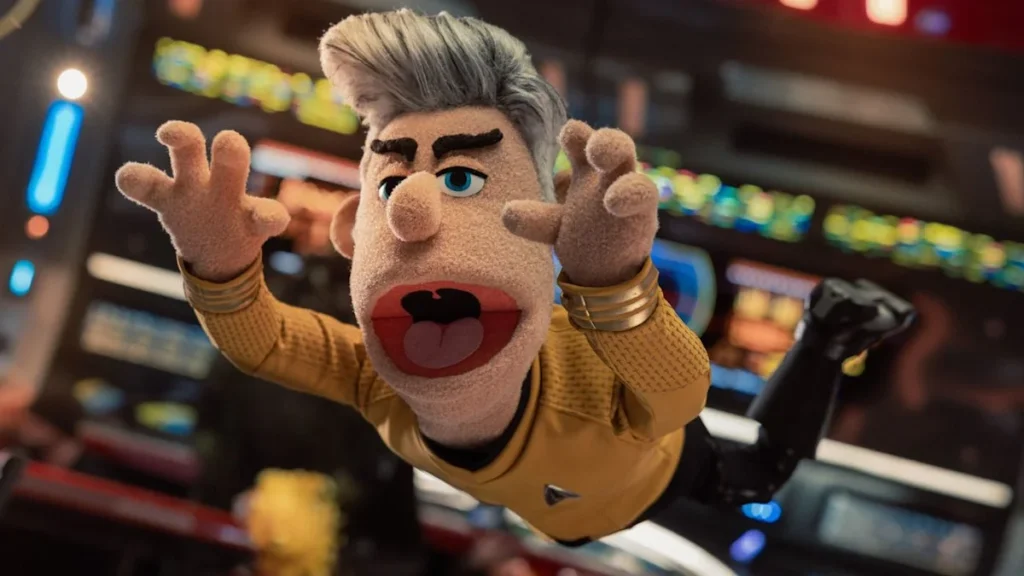
Now we are on to S4 and SNW is all gimmicks, all the time. With the most recent soap opera gimmickisode, SNW has officially depleted its reservoir of goodwill. The episode took a truly great story about loss and cheapened it with a dorky soap opera aesthetic. Whatever pathos Anson Mount mustered was wasted on hammy acting and a stupid plotline.
If we scan out to the other “NewTrek” properties, similar things are afoot. Starfleet Academy was a cornucopia of cliches and strange choices to desperately try and hook young people into the franchise. Discovery awkwardly shoehorned Spock’s sister, to only then wander around with all sorts of weird stories. Let’s not even discuss that Section 31 abomination.
However, I say this while admiring NewTrek’s willingness to try creative things. NewTrek has consistently pushed boundaries in pursuit of untold stories. Sometimes this works (La’An Noonien-Singh), sometimes it flops (mushroom drives), and sometimes it causes MAGA-heads to explode (gay Klingons!) Regardless, I admire the showrunners’ willingness to try out new things. Starfleet Academy was sexy good fun. Discovery took wild turns. Even Picard finally got its shit together to produce a glorious Next Generation reunion for Season 3.
Yet for every creative decision that gives you a real life Boimler hopping on a saddle exclaiming “Riker!”, you get a turd like Season 2 of Picard.
This is where Star Trek is stuck. It is wildly swinging around and accepting every creative idea thrown at it. When taken as a whole it feels desperate. There is ample enjoyment and entertainment coming from NewTrek, but it all comes with this pall of desperation. Like a jittery cigarette-smelling salesperson who will say anything to sell you a crummy used car.
Trek seems to have forgotten one of the most important components of creativity: boundaries. The history of movies and TV is absolutely stuffed with tales of productions that had their budgets cut to the bone, only to produce award-winning results. 1982’s Star Trek II and The Thing are prime examples. These are two of the greatest sci-fi movies ever made and they were produced on extremely tight budgets. Boundaries focused the creativity of the artists into something truly brilliant.
Conversely, there are equally as many tales of well-funded productions going off the rails to produce epic disasters, like director John Boorman’s drug fueled, penis-hating, flying head fever dream Zardoz (1974) starring a bewildered Sean Connery fresh from dumping out of the Bond franchise. I could name at least another dozen sci-fi movies that fit this creative excess status, but I will never resist the chance to poke fun at Zardoz.
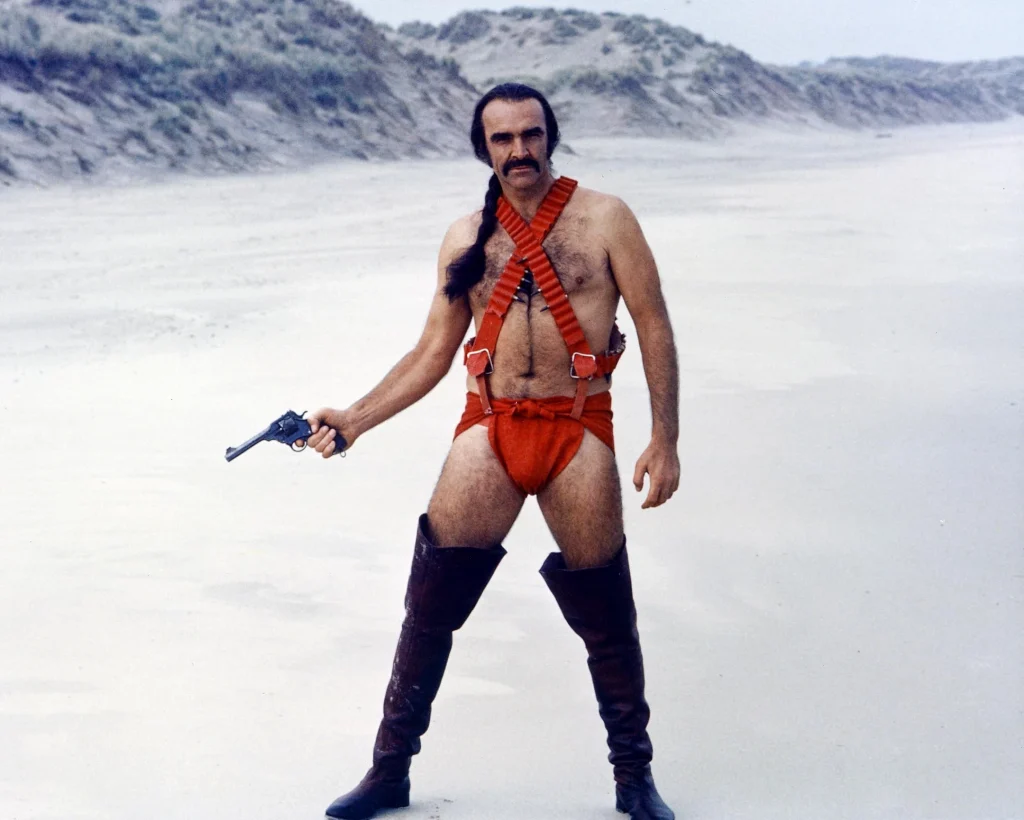
Boundaries fuel creativity. Freedom fuels Zardoz. Star Trek is dangerously close to having a flying head that booms “the penis is bad, the gun is good, live long and more tax cuts!” …and that scares the tribbles out of me.
This is where I begrudgingly agree with some of the more “conservative” elements of the Trek fandom to say: Let’s dial Trek back to being about exploration, bravery, and moral quandaries. More trekking, less gimmicking.
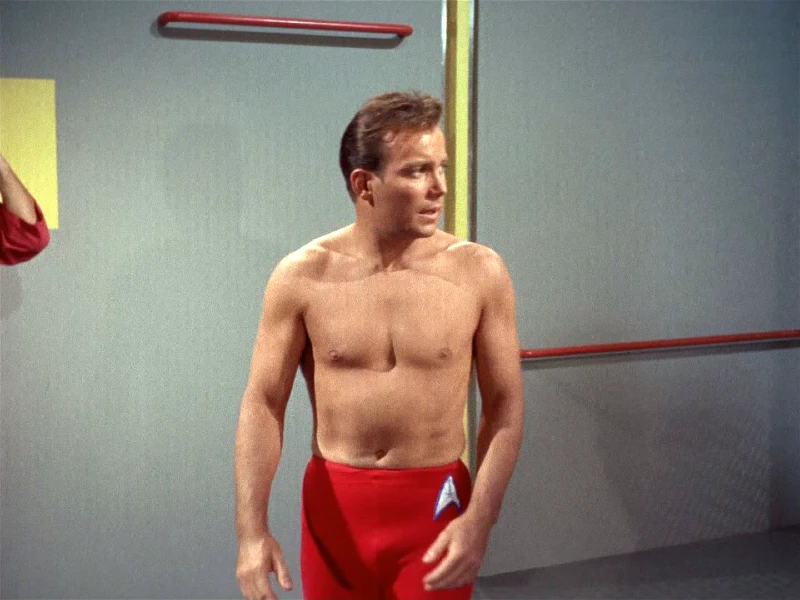
However, those “conservative” elements are dead wrong when they claim that Trek must stop creating allegories about our current political, social, and spiritual challenges. Or that, in MAGA parlance, it needs to stop being “woke.” Trek has always held a mirror to the current culture and shows us that we are savages who need a slap from a sweat-slicked, shirtless Kirk.
Oh my.
Nevertheless, Trek is dangerously close to a (-nother) franchise-exhaustion event horizon. This is the black hole of creativity that consumes a franchise, resulting in gimmicks and lazy productions clamoring for any crumb of relevance. Once a franchise falls into this hole, it must go into hibernation or a full reboot. Last time this happened to Trek we got the lazy gimmick of Star Trek: Nemesis.
However, among all this gimmicking, there is news of a new Trek movie on the horizon that the writers have described as “a story about bad apples” and “Crimson Tide meets Training Day.” That is … fascinating. I will withhold judgment. It sounds like a fresh new direction, which is promising. Now, will Paramount have the discipline to 1) keep their boss’s MAGA snoots out of the production and; 2) make the most of Trek canon rather than attempting to re-engineer it?
I have a bad feeling about this, borrowing from that other franchise.
Perhaps Gene Roddenberry was on to something way back in 1966. Roddenberry had a list of rules for Trek stories, including a “no melodrama” rule. The crew could not fight among themselves; they must collaborate and solve problems. Trek has long since abandoned Roddenberry’s rules, but there is a lot of merit to his vision. It might have been an amphetamine-induced vision, but it was still every bit as seductive as whatever he was snorting up his nose.
Roddenberry saw a future where humans really did evolve and began trying to truly understand the universe. This was why every alien was so captivated with us, from rubbery green monsters to booby babes in gravity-defying “dresses.” We were growing beyond our savage programming to be something more refined, intelligent, and empathetic.
Roddenberry’s vision was intentionally constraining. It forced the artists to come up with more innovative ways to tell a story, without resorting to clichéd antagonists. This constraint may have been frustrating, but it kept Trek in line. Once Roddenberry’s vision was gone, we got NewTrek. Which has managed to tell some interesting stories but has also overindulged in creative excess.
Mostly, Roddenberry’s vision forced Trek to be about competent people with evolved sensibilities struggling with complex problems rather than lazy stories with savage testosterone machines barking “I will make them pay for what they have done!”
Incidentally, this is why the Moby Dick scene in First Contact is so deliciously good. We are witnessing the character who defined Trek’s refined, intelligent, empathetic core coming unglued and turning savage. It perfectly encapsulates the central struggle of Trek and Roddenberry’s vision. Thankfully, Lily Sloane brings Picard back from the brink.
I never read Moby Dick either.
So, what is the answer here? While I am reluctant to sound like some old fart yearning for the good ole days, I think Trek needs to return to some version of Roddenberry’s 1960’s vision: earnest stories about competent people of all types solving big problems. Boundaries are healthy, and Trek needs them. We all need them.